Trade

This section presents updates on Vietnam’s trade policies, market access issues, trade negotiations, and regulatory developments affecting domestic and international trade.

  • | |

    Gov Tasks MOIT to Lead Dialogue on EU’s CBAM Implementation

    The Government has assigned the Ministry of Industry and Trade (MOIT) to coordinate and proactively engage in dialogue with partners during the implementation of tasks regarding the EU’s Carbon Border Adjustment Mechanism. The Government Office recently issued Notice No. 6082/VPCP-NN to the Ministries of Industry and Trade (MOIT), Natural Resources and Environment (MONRE), Public Security, Justice, Finance, Planning and Investment, Transport, Agriculture and Rural Development, Foreign Affairs, and the State Bank of Vietnam regarding the…

  • | |

    EU’s CBAM: Opportunity or Challenge for Vietnam?

    The CBAM Mechanism: Opportunity or Challenge for Vietnamese Exports? The EU’s Carbon Border Adjustment Mechanism (CBAM) is an environmental trade policy involving tariffs applied to imports from carbon-intensive producers. This mechanism is regarded as both a barrier and an opportunity for Vietnamese export enterprises. To better understand this issue, Industry and Trade Newspaper conducted an interview with Mr. Ma Khai Hien, Director of the Research and Development Center for Energy Savings (Enerteam). Reporter: Sir, how…

  • |

    Vietnam Industry and Trade News Bulletin for Febuary 5, 2021

    A. OUTSTANDING ECONOMIC AND INDUSTRY NEWS 1. Sugar Industry and Trade Defense • Price and Competition: Vietnamese sugar prices are currently the lowest in the region. There is a sudden surge in imports from Cambodia, Malaysia, and Indonesia, which is suspected to be an evasion of trade defense measures. • Proposed Solutions: Experts suggest applying anti-dumping and anti-subsidy taxes to create a level playing field for domestic producers and prevent farmers from abandoning their fields…

  • |

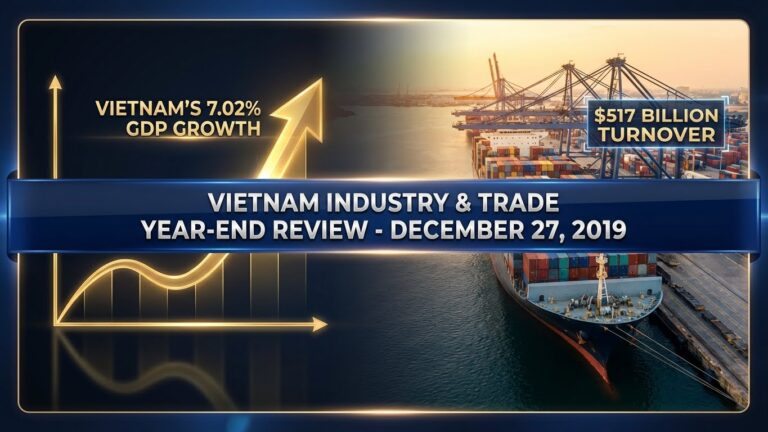
    Industry and Trade developments from 27 December 2019

    A. Year-End Review and Macroeconomic Achievements B. International Trade and Import-Export Highlights C. Energy and Heavy Industry Updates D. Domestic Market and Consumer Trends E. Administrative Reform and Digitalisation